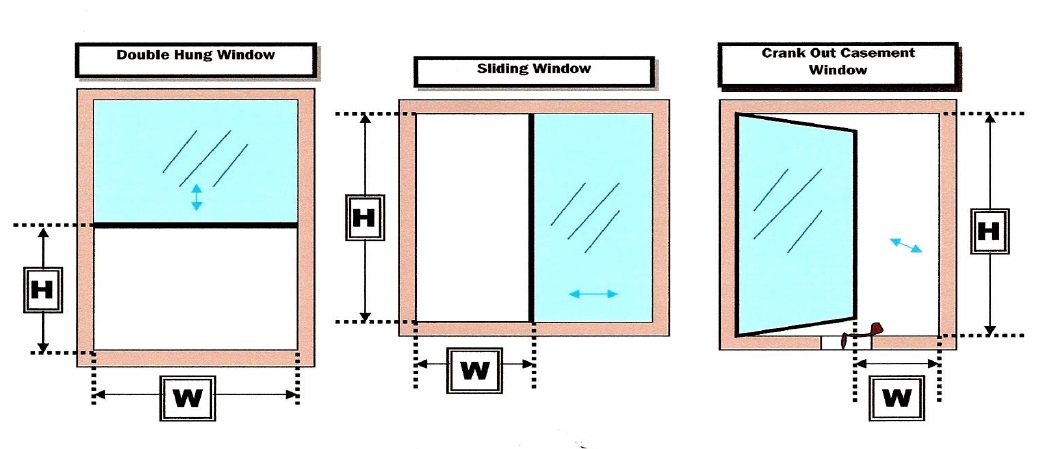
SECONDARY MEANS OF ESCAPE EGRESS WINDOWS
The purpose of the secondary means of escape is to provide an
occupant with an alternate escape route when fire or smoke blocks
the primary means of escape from the dwelling unit.
Few of us think of windows as lifesaving equipment, but they are!
During a fire, when you need to escape, identify two ways out of every room in case your
primary escape route becomes blocked or when rescue personnel need to enter—the right
size egress window can make the difference between life and death.
Make sure all doors and windows that lead outside are operable and are not blocked by furniture.
Requirements of the NFPA 101 Life Safety Code, 2015 edition.
Secondary Means of Escape—EGRESS WINDOWS
NFPA 101: 24.21.2.3.3
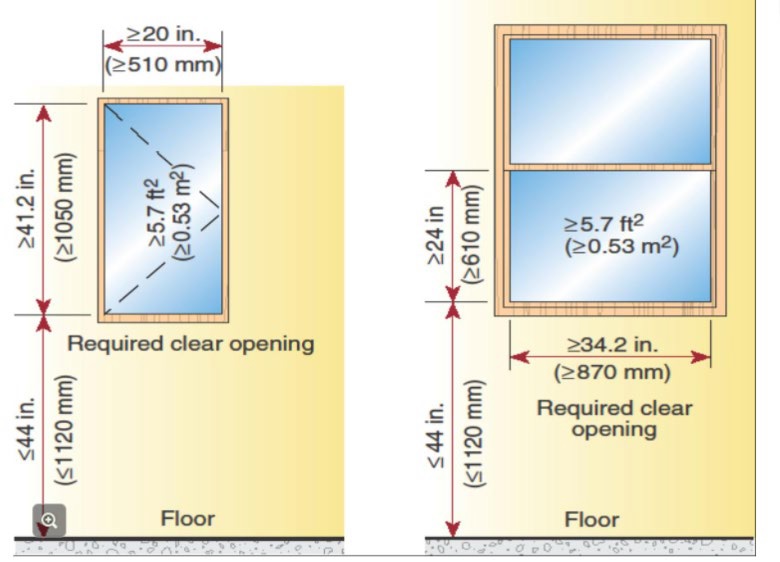
An outside window or door operable from the inside without the use of tools, keys, or special
effort, and shall provide a clear opening of not less than 5.7 square feet for new windows.
The width shall be not less than 20 in. and height shall be not less than 24 in. The bottom of
the opening shall be not more than 44 in. above the floor.
Such means of escape shall be acceptable where one of the following criteria is met:
(1) The window shall be within 20 ft. of the finished ground level.
(2) The window shall be directly accessible to fire department rescue apparatus as approved by
(3) The window or door shall open onto an exterior balcony.
NOTE: Minimum window requirement of 20” x 24” = 3.33 sq. ft.
The code requires that every sleeping room, living area or school classroom must be provided with a secondary means of escape. That means at least one operable window or exterior door that leads to the outside and is approved for emergency egress or rescue.